
Table of Contents
High Protein Cat Food 2026 — What It Is, How Much Your Cat Needs and How to Choose the Right One
Honestly, I never thought I would become the kind of person who reads the back of cat food bags in the middle of a pet store aisle. But here I am. And if you have a cat at home, you probably know exactly what I mean.
You pick up one bag that is natural and balanced. You pick up another complete nutrition with real chicken. They all look the same. They all sound the same. And most of them, honestly? Are not giving your cat what she actually needs in terms of high-protein cat food. I found this out about my own cat completely by accident.
She had been eating the same brand for almost a year. Nothing dramatic was happening; she was not sick, and she was not losing weight. But something felt off. She slept way more than usual. She stopped jumping up on the windowsill, which used to be her favorite spot. Her fur felt rough when I stroked her, not soft like it used to be. I kept thinking she was just getting older.
Then at her annual checkup the vet picked up her food bowl, looked at the ingredients, and just said, “This food is mostly fillers. Her body is starving for real protein.”
I felt terrible, honestly. I had no idea. I believed I was following all the correct steps.
That conversation changed everything about how I feed her.
So What Does High Protein Actually Mean for a Cat?
Here is something most people do not realize until a vet tells them. Cats are not like dogs or humans when it comes to food. They are what scientists call “obligate carnivores,” meaning their entire body is literally built to run on animal meat and nothing else. You can read more about feline carnivore biology on PetMD.
A cat’s liver never switches off protein processing. Even during sleep, and even when they hardly move throughout the day, their bodies are continuously metabolizing protein. So when the food you give them is mostly corn and wheat and soy with just a little bit of chicken flavoring thrown in, their body does not get what it needs from the food. So it starts taking it from somewhere else. Their own muscles.
This happens slowly. So slowly that most owners do not notice until real damage has already been done. I did not notice for almost a year. And I still feel bad about that.
The fix sounds simple: feed them real meat. But walking into a pet store and figuring out which food actually has real meat versus which food just pretends to have real meat on the label? That is where it gets confusing. And that is exactly what I am going to help you figure out.
What Is the Actual Protein Requirement for a Cat?
According to the Association of American Feed Control Officials (AAFCO), adult cats need a minimum of 26% protein in their diet on a dry matter basis. But most vets and feline nutrition experts recommend much higher, between 35% and 50%, for optimal health.
Kittens need at least 30% minimum because their bodies are growing and developing rapidly.
Here is a simple way to check your cat’s current food:
- Pick up the bag or can
- Turn it to the back
- Look at the guaranteed analysis.
- Find “Crude Protein”
- If it says less than 30% → too low
- If it says 35% or higher → good
- If it says 40%+ → excellent

Signs Your Cat Needs High Protein Cat Food
Before I changed my cat’s food, I noticed several signs that I now recognize as protein deficiency. If your cat is showing any of these, it might be time to upgrade their food:
The first sign I noticed was excessive shedding. My cat was leaving fur everywhere: on the sofa, on my clothes, on her bed. A dull, rough coat is one of the earliest signs of inadequate protein intake.
The second sign was low energy and laziness. Yes, cats sleep a lot, but there is a difference between normal cat napping and a cat that has zero interest in playing, exploring, or interacting. My cat stopped chasing her toy entirely.
Other signs to watch for include unexplained weight loss even when eating regularly; frequent illness and infections due to a weakened immune system; muscle loss, especially visible around the shoulders and spine; and poor wound healing.
What to Look for in a High Protein Cat Food
After researching for weeks and carefully studying the ingredients of several high-protein cat food brands, here is exactly what I look for now when buying cat food.
The first ingredient must be real meat: Look for chicken, turkey, salmon, tuna, duck, or rabbit as the very first ingredient. Not “chicken meal” or “meat byproduct” actually named meat.
Protein percentage should be 35% or higher: For wet food, check on a dry matter basis because wet food naturally shows lower percentages due to water content.
Limited carbohydrates: Cats have almost no biological need for carbohydrates. If the ingredient list is full of corn, wheat, rice, and potato, put it back on the shelf.
No artificial preservatives: Avoid foods with BHA, BHT, or ethoxyquin. These are cheap chemical preservatives linked to health problems in long-term use.
Named fat sources: Chicken fat and salmon oil are good. Generic “animal fat” is a red flag.
Wet Food vs. Dry Food: Which is Better for Protein?
This is the question I get asked most often, and my honest answer is wet food wins for protein every single time.
Here is why. Dry kibble needs starch to hold its shape during manufacturing. This means even high-quality dry food contains more carbohydrates than wet food. Wet food, on the other hand, is mostly meat and water, which is actually very close to what cats would naturally eat in the wild.
My cat’s transformation after switching to primarily wet food was dramatic. Within three weeks her coat became noticeably shinier. Within six weeks she was playing again like a kitten. Her energy levels went up completely. The food I switched her to was a wet salmon-based formula, and the results genuinely surprised me.
That said, dry food is not the enemy. It is convenient, more affordable, and good for dental health. The best approach is a combination of both. Wet food as the main meal and a small amount of dry food as a supplement.
Best High Protein Cat Food Brands to Consider
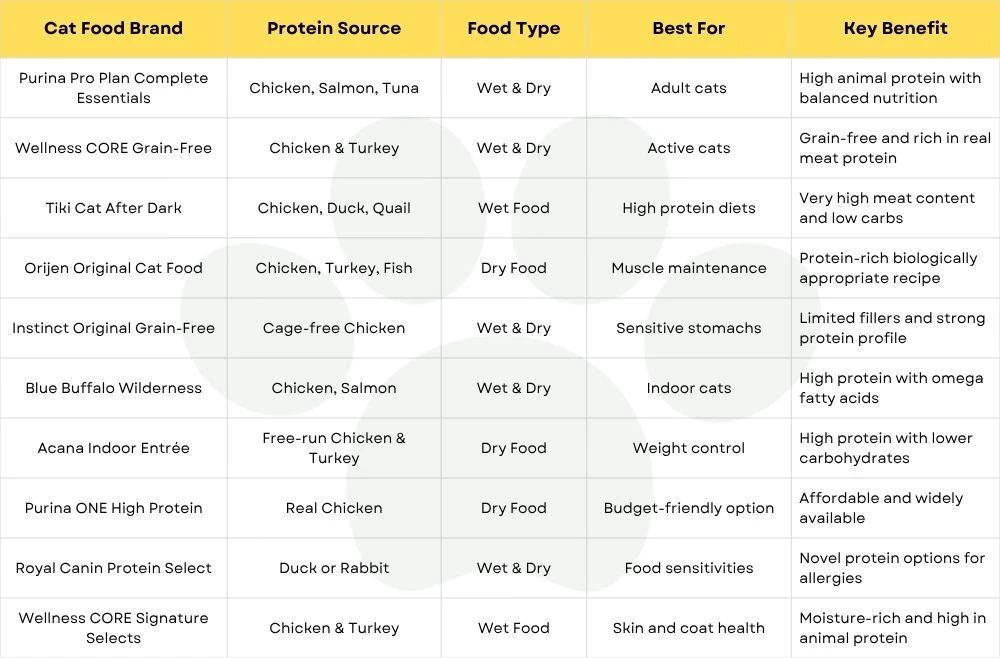
Note: While I have personally tried some wet salmon- and chicken-based formulas for my own cat, not every product in this table has been personally tested by me. This list is based on thorough ingredient research, nutritional analysis, and widely trusted pet nutrition sources. We have also done a detailed review of one of these brands; read our Blue Buffalo cat food review for an in-depth look. Always consult your veterinarian before making major changes to your cat’s diet.
Proteins to Avoid
Just as important as knowing what to look for is knowing what to avoid:
Generic “meat meal” or “animal byproduct meal” without a named source: you have no idea what animal this came from. Always look for named sources like “chicken meal” at a minimum.
Plant proteins like soy protein isolate or pea protein inflate the protein percentage on the label but are poorly utilized by a cat’s body. Cats need animal protein specifically.
How I Transitioned My Cat to High-Protein Cat Food
One mistake many people make is switching food too suddenly. I made this mistake the first time, and my cat had an upset stomach for three days straight.
The right way to transition is slow and gradual:
Days 1 to 3 — mix 75% old food with 25% new food Days 4 to 6 — mix 50% old food with 50% new food Days 7 to 9 — mix 25% old food with 75% new food Day 10 onwards — serve 100% new food
This gives your cat’s digestive system time to adjust to the new protein sources without causing stomach upset or diarrhea.
Simple Summary
Cats are obligate carnivores, and choosing the right high-protein cat food is one of the most important decisions you can make for their health. Most commercial cat foods are loaded with cheap fillers that do not meet your cat’s real nutritional needs.
Look for foods with real named meat as the first ingredient, a protein content of 35% or higher, and minimal carbohydrates. Wet food is generally better for protein, but a combination of wet and dry works well for most cats.
Most importantly, watch your cat. They tell you everything through their coat, energy levels, and behavior. When you get the protein right, you will see the difference within weeks. I did it with my cat, and it was one of the best decisions I ever made for her health.
Note: Always consult your veterinarian before making major changes to your cat’s diet, especially if your cat has existing health conditions.
FAQs
What food is high in protein for cats?
Any cat food with real, named meat as the first ingredient and a crude protein level of 35% or higher qualifies as high protein. Wet foods made with salmon, chicken, turkey, or duck are naturally the richest sources. Always check the guaranteed analysis on the back of the packaging; that number tells you everything.
Is 28% protein cat food good enough?
Honestly no. 28% meets the bare minimum set by AAFCO, but it is not enough for a truly healthy and active cat. Most vets and feline nutrition experts recommend at least 35% for adult cats. If your current food shows 28%, your cat is surviving on it but definitely not thriving.
What cat food has 30% protein?
Most mid-range commercial cat foods sit around 30% protein. Brands like Purina ONE and some Blue Buffalo varieties fall in this range. It is better than 28% but still on the lower end of what cats actually need. If your cat is active or showing any signs of protein deficiency, consider upgrading to a 35%+ formula.
Is 40% protein too much for cats?
Not at all. For healthy adult cats, 40% protein is actually ideal. Cats are obligate carnivores, and their bodies are built to handle and thrive on high protein intake. The only exception is cats with existing kidney disease; those cats may need restricted protein under direct vet supervision.
Is too much protein bad for cats?
For healthy cats, no. Excess protein is simply broken down and eliminated naturally by the body. However, if your cat has kidney disease or other serious health conditions, then very high protein intake can put extra strain on the kidneys. Always check with your vet if your cat has any existing health issues before switching to a high protein diet.